Calumniate - slander; defame by making false and malicious statement about somebody

Calumny - a false and malicious statement
Calumny is used more than calumniate.
Usage examples -
  • Spiritual Bouquet: Pray for those who persecute and calumniate you. St. Matthew 5:44
  • This spiteful calumny against us ...
  • It has been the ugliest, most calumny-ridden election season I've ever seen.
Mnemonic -
Campaign of calumny
(mudslinging during election campaign)


Other forms of the word -
calumnious
calumniation
calumniator

Additional note -
Read Calumny column of jaalmag.com here -
http://www.jaalmag.com/calumnycolumn.htm

Invidious - unfair/unjust which may cause envy/resentment

Word meaning -

unpleasant and unfairly discriminating
likely to offend somebody or make them jealous i.e. causing or tending to cause animosity, resentment, or envy

This is a word is express unfair/unjust treatment of something by somebody which may cause resentment or envy to some people.

Usage examples -
  • Why do we need to measure who suffered more, a task that as well as being invidious is impossible as nobody can compare the pain of the two races.
  • The use of English, as the sole language throughout the electoral process, continues to be discriminatory and has a direct and invidious impact upon the ability of such populations (with limited ability to read English) to participate actively in the electoral process.
  • We were in the invidious position of having to choose whether to break the law or risk lives.
  • It would be invidious to single out any one person to thank.
  • Are you saying that it’s not possible for laws to be in place due to invidious ideas about gender (or race, or other things)? Of course you’re not. That would be idiotic.

Etymological note -

Words invidious and envious have the same Latin root. Invidious is used to refer to something unfair that causes envy.



Additional note -

This word is strongly related to the idea of unfair/unjust.
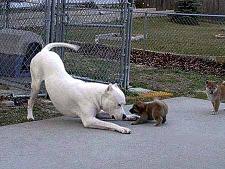
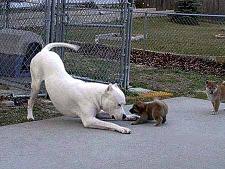
Unfair fight.

Unfair tug of war

Plebiscite - direct vote of people on important public issue

Plebs + Scitius (Latin root which means resolution or decree)

Word meaning -

1. A direct vote of the qualified voters of a country/region on an important public issue
2. The vote by which the people of a political unit determine autonomy or affiliation with another country.


Usage examples -
  • Senior Kashmiri Hurriyat leader, Syed Ali Gilani has asked India to fulfil its commitment to hold a plebiscite in occupied Kashmir, as part of the UN resolution on the vexed issue, and allow the people to decide their fate.
  • Plebiscite will decide smoking issue.
  • Rebel leader denies nodding to plebiscite.

Pakistan in favor of plebiscite in Kashmir


Link to actual (big) map

Plebs

In ancient Rome population was split into three classes -
Plebs (lower class)
Equites (Middle Class)
Patricians (Nobility)

The term plebs is used to refer to the common people (the populace) in an informal way.
The use if this word considered a bit offensive.


Usage examples -
  • Hereditary nobility may be one of the more preposterous notions humanity has come up with, yet the less real-world power royalty wields, the more deeply appealing we plebs find it—not as a mechanism of practical politics, but as a collective dream, a fairy tale brought to life. And the most resonant dream, as countless fairy tales show, is the one about the imperiled princess.
  • I'd rather be boiling my willy in vinegar than stand here with you thick plebs.

Promulgate - To spread an idea, a belief & To announce a new law or system officially or publicly

Word meaning -
To spread an idea, a belief, etc. among many people
To announce a new law or system officially or publicly

Usage examples -
  • The State Government is all set to promulgate ordinance to put down land mafia.
  • He perhaps fears that it would prepare the ground for the Centre to promulgate President’s rule in the state.
  • The campaign will promulgate heart attack symptoms through billboard posters, press, radio and online advertising.
  • It may be nice to think the quality of ideas - not those who promulgate them - determines their persuasiveness, but the reality is more complex.
  • I believe those that promulgate misleading information or misinformation can have an impact on individuals and parents.

Mnemonic -
Pope promulgating peace


John Paul II (1920-2005) of Roman Catholic Church.
White pigeon symbolizes peace.

Other forms of the word -

PROMULGATED
PROMULGATING
PROMULGATION
PROMULGATOR

Close relatives -

PROMULGE = To Promulge
PROMULGED
PROMULGING
PROMULGER